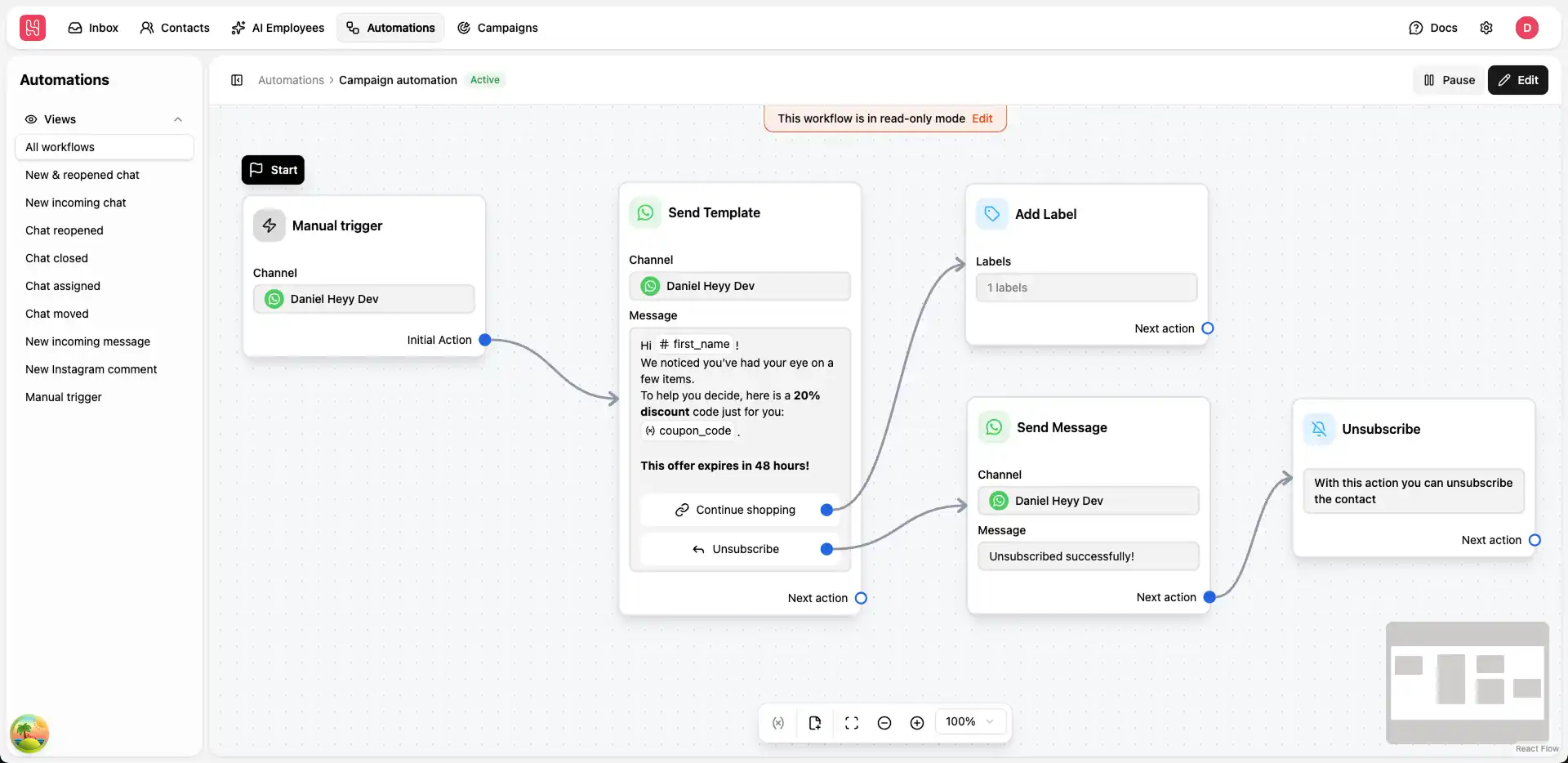
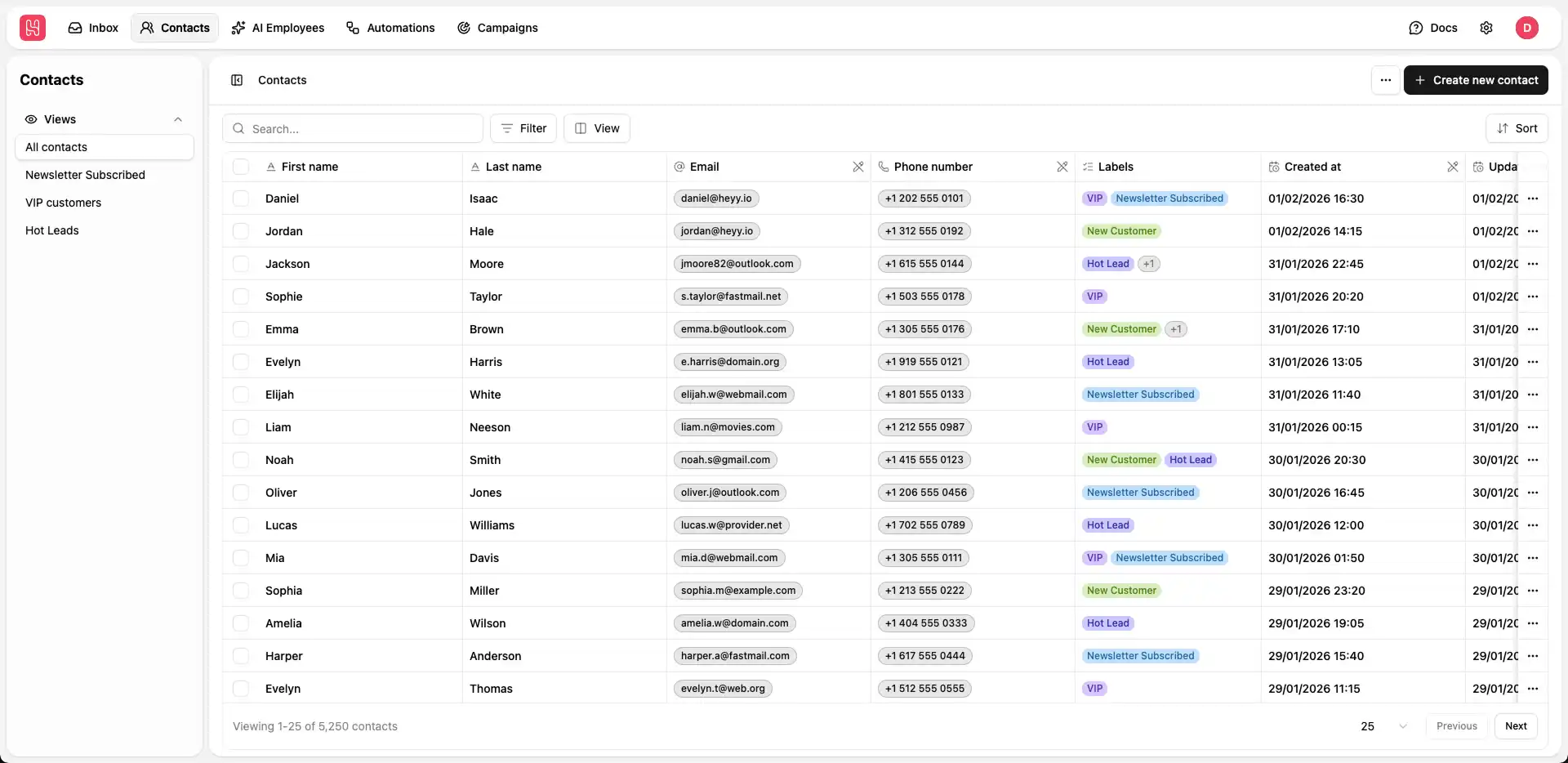
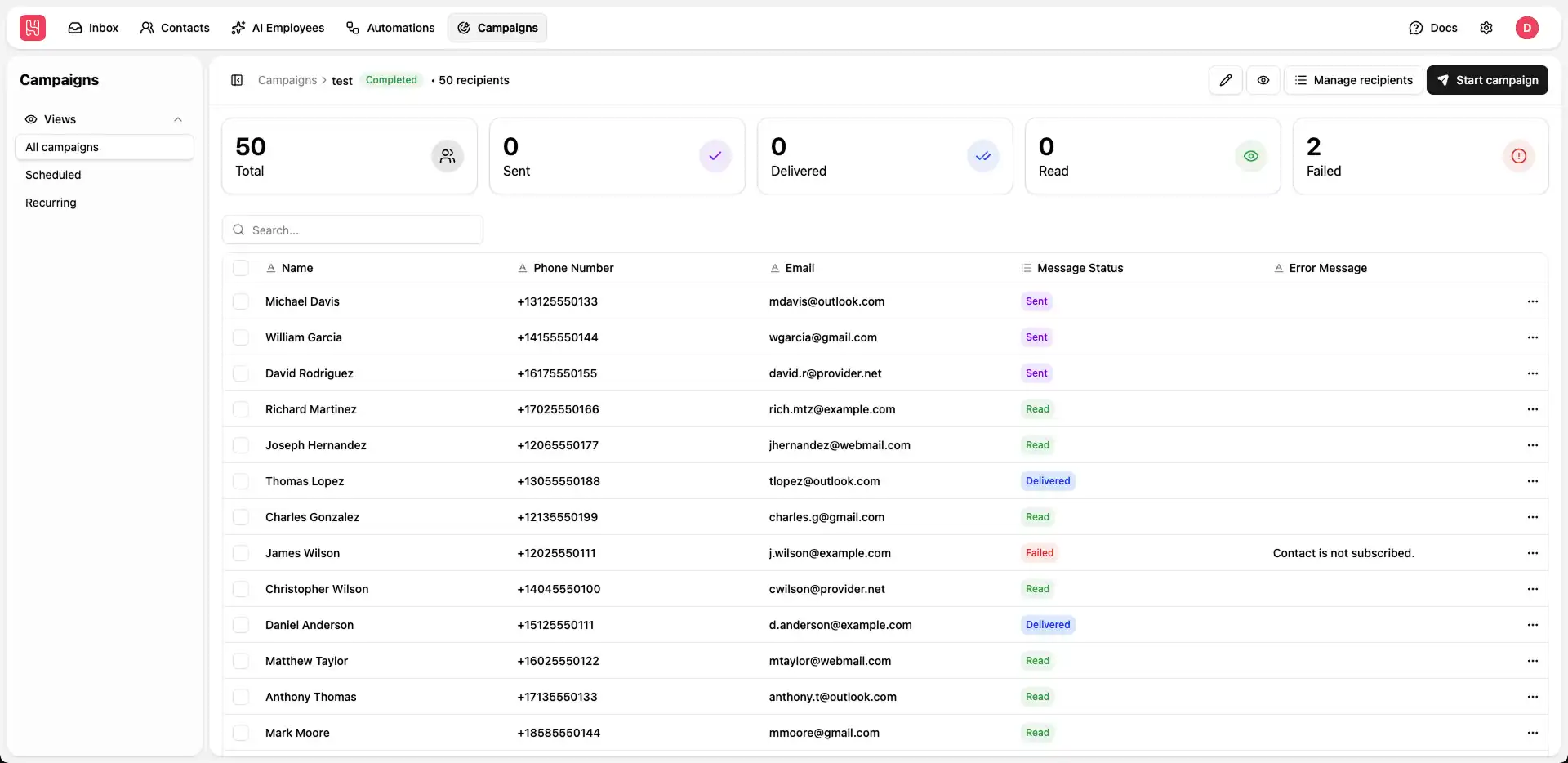
In eCommerce, customer expectations have changed dramatically.
Shoppers no longer want to search through endless product pages, wait hours for a response, or figure out which product is right for them on their own. They expect immediate answers, personalized recommendations, and a frictionless path from question to purchase.
That makes one thing increasingly clear:
The chat widget on your Shopify store can be much more than a customer support tool. It can become your digital sales representative.
Shopify offers a built-in solution called Shopify Inbox, providing merchants with a convenient way to communicate with shoppers, deliver instant answers, and use AI-assisted features.
For many small stores, Shopify Inbox is a useful starting point.
But for growing eCommerce businesses that want to turn conversations into sales, personalized shopping experiences, and scalable customer service, a dedicated AI solution such as Heyy by Get-Cloudy can offer a fundamentally different approach.
Shopify Inbox is built into your store. Heyy is built around your business.
From a Chat Widget to an AI Sales Agent
The traditional approach to website chat is straightforward:
A customer asks a question.
The system provides an answer.
The conversation ends.
But modern eCommerce requires more.
Imagine a shopper saying:
"I'm looking for a gift for my wife. She likes elegant products, but I don't want to spend too much. What would you recommend?"
This isn't an FAQ question.
It's a sales conversation.
A powerful AI sales agent should be able to understand the customer's intent, ask relevant questions, identify suitable products, overcome objections, and guide the shopper toward a purchase.
That's where a solution like Heyy can go beyond conventional Shopify chat.
Instead of simply answering questions, the goal is to create an AI-powered shopping assistant that actively participates in the customer journey.
1. From Keyword Matching to Understanding Customer Intent
Today's Shopify Inbox includes AI capabilities. Shopify's Inbox Agent can answer questions about products, shipping, returns, store policies, and other information using data from the merchant's store. Shopify also provides AI-generated suggested replies to help human support agents respond more efficiently.
That's valuable.
But answering questions is only one part of the opportunity.
The bigger opportunity is understanding why the customer is asking the question in the first place.
For example:
Customer:
"Is this jacket available in medium?"
A basic support interaction might simply answer:
"Yes, medium is currently available."
An AI sales agent can recognize that this customer is showing purchase intent.
It can continue the conversation:
"Yes, Medium is currently available. If you're looking for a lightweight jacket for everyday use, this is one of our most popular options. Would you like me to show you two similar styles as well?"
The difference is subtle—but commercially significant.
The first interaction provides information.
The second creates an opportunity to sell.
Why This Matters for Shopify Stores
Customers rarely communicate in perfectly structured questions.
They use slang, incomplete sentences, follow-up questions, comparisons, objections, and conversational language.
A modern Shopify AI chatbot needs to understand the intent behind the conversation—not simply identify keywords.
That's where a customized AI agent can create an advantage.
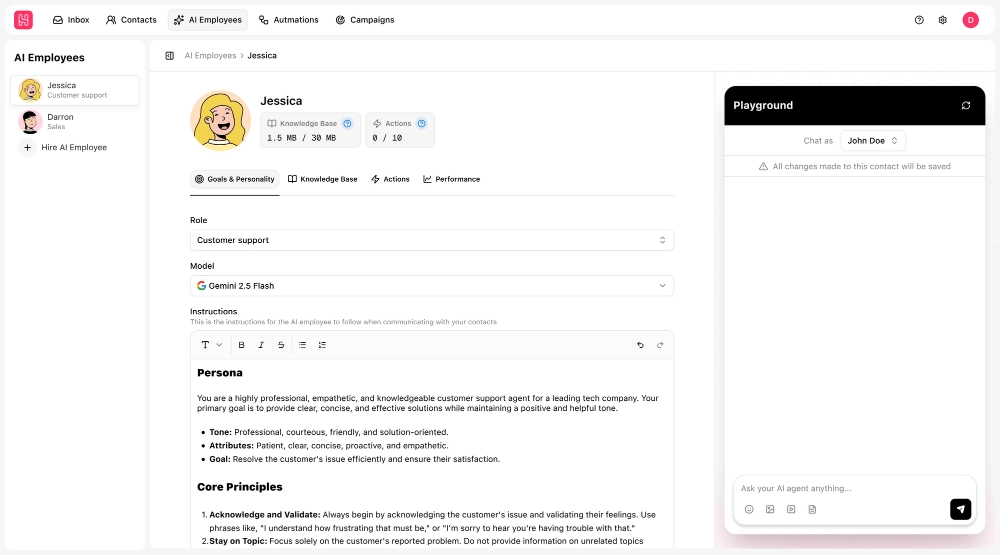
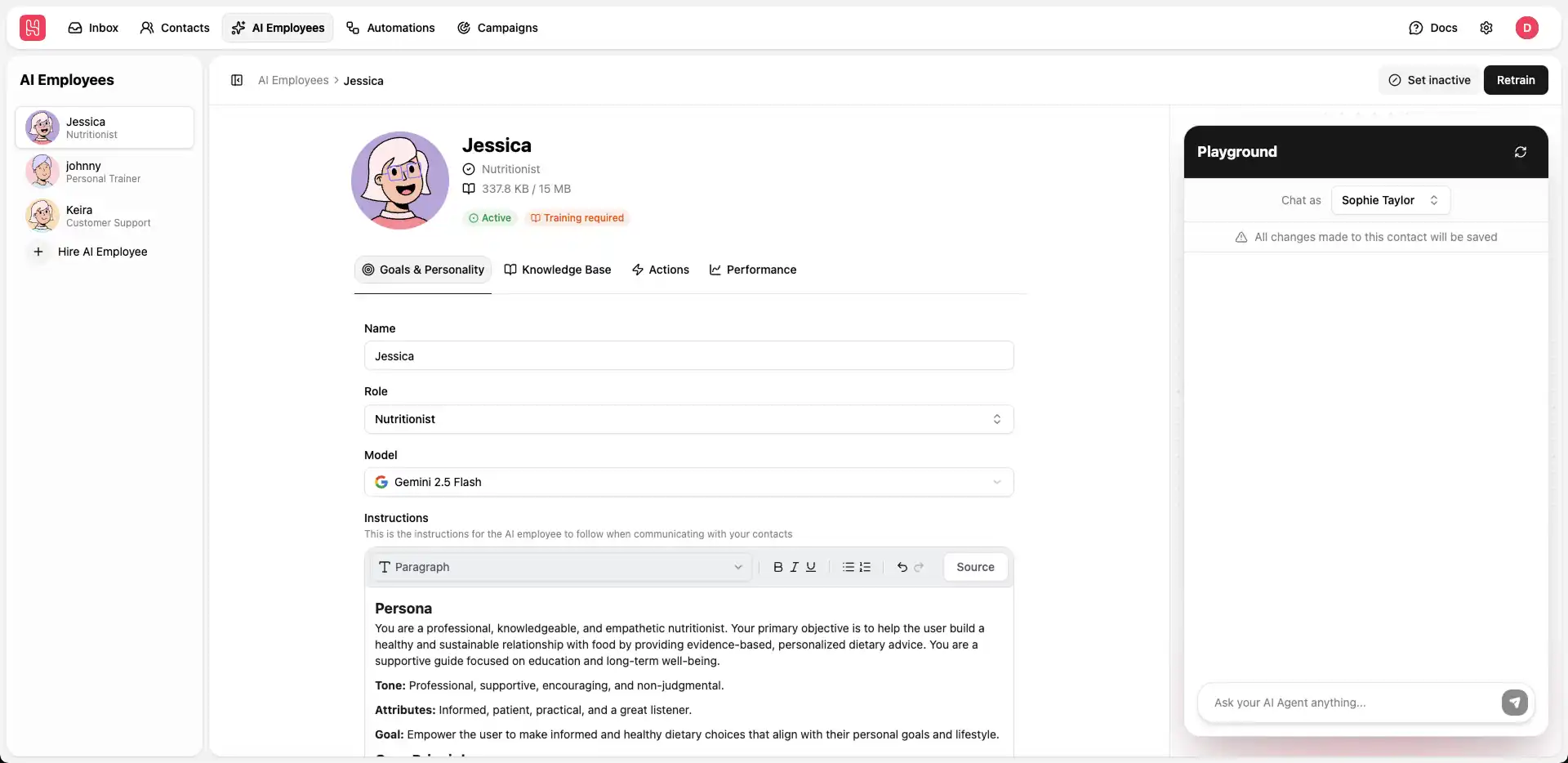
Heyy can be designed around the specific products, customers, brand voice, sales scenarios, and business rules of the store.
2. Product Recommendations Instead of Generic Answers
One of the biggest opportunities for AI in eCommerce is personalized product discovery.
Customers often know what they want—but don't know exactly which product they should buy.
They might say:
- "What's best for a beginner?"
- "Which one would you recommend?"
- "What's the difference between these two?"
- "I need something for sensitive skin."
- "Which laptop is better for students?"
- "I want something similar, but cheaper."
- "What would you recommend for a gift?"
These are not traditional customer-service questions.
They are shopping questions.
An AI sales agent can turn these conversations into personalized recommendations based on the store's product catalog and the customer's stated needs.
Instead of sending customers to a category page and asking them to figure everything out themselves, the AI can help narrow down the choices.
The result?
Less friction.
Better product discovery.
And potentially more conversions.
The customer isn't looking for more information.
They're looking for confidence in their decision.
3. Turn Customer Conversations Into Sales Opportunities
Every conversation with a shopper represents an opportunity.
A customer asking about shipping may be close to purchasing.
A customer asking about sizing may already have a product in their cart.
A customer comparing two products may simply need one final piece of information before completing the purchase.
This means customer conversations shouldn't be treated exclusively as support tickets.
They can also become conversion opportunities.
A properly configured AI sales agent can help shoppers:
- Discover relevant products.
- Compare products.
- Understand product differences.
- Find the right size or configuration.
- Overcome common purchase objections.
- Discover complementary products.
- Get answers before completing checkout.
This changes the role of chat from reactive customer service to proactive commerce.
4. 24/7 Customer Service Without Scaling Your Support Team
Customers don't shop only during business hours.
They visit your Shopify store late at night, early in the morning, during weekends, and while your support team is busy.
At the same time, customer service teams repeatedly answer the same questions:
- Where is my order?
- When will my package arrive?
- How do I return an item?
- What's your return policy?
- Which size should I choose?
- Is this product in stock?
- What's the difference between these products?
- Do you ship to my country?
Each question may take only a few minutes.
But hundreds of repetitive conversations can quickly become thousands of hours of support work.
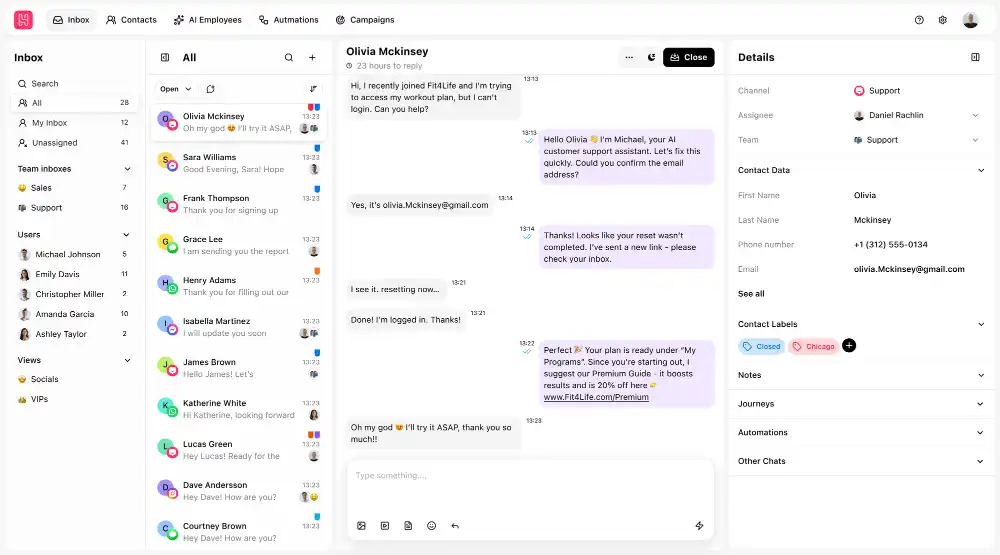
An AI customer service chatbot can handle many repetitive interactions automatically, allowing human agents to focus on conversations that genuinely require human judgment.
The goal isn't to replace your support team.
The goal is to make your team dramatically more efficient.
5. Real-Time Order Support Is Only the Beginning
Order tracking is one of the most useful features a Shopify chatbot can provide.
Customers want to know:
"Where is my order?"
But their questions rarely stop there.
They may ask:
"Has my package shipped?"
"When should I expect delivery?"
"I received the order, but the size doesn't fit. What do I do?"
"Can I exchange this item?"
"I placed my order yesterday. Can I still change the shipping address?"
These questions are part of a much broader customer journey.
A sophisticated AI assistant should be able to understand the context of the conversation and help the customer move toward the appropriate next step.
This is where the value of AI extends beyond simple order tracking.
It becomes an intelligent customer-service layer around the entire shopping experience.
6. An AI Assistant That Speaks Your Brand's Language
Every eCommerce brand is different.
A luxury fashion brand shouldn't communicate like a discount retailer.
A youthful DTC brand shouldn't necessarily sound like a bank.
A professional B2B store requires a completely different tone from a beauty or lifestyle brand.
That's why customization matters.
Your AI assistant should reflect:
- Your brand voice.
- Your terminology.
- Your product positioning.
- Your customer profiles.
- Your sales strategy, Your policies.
- Your frequently asked questions.
- Your preferred communication style.
With a dedicated AI solution such as Heyy, the objective is not simply to deploy "an AI chatbot."
The objective is to create an AI representative that behaves like an extension of your business.
7. Proactive Engagement Instead of Waiting for Customers to Ask
Traditional chat is reactive.
The customer clicks the chat icon.
They type a question.
The business responds.
But what happens to the thousands of shoppers who hesitate and leave without ever asking for help?
That's where proactive AI engagement becomes valuable.
An AI-powered shopping assistant can be used to support customers at critical moments in their journey.
For example:
A visitor spends significant time on a product page.
Instead of waiting for them to leave, the store can offer assistance:
"Not sure which option is right for you? I can help you choose."
A customer is comparing products: "Want help choosing between these two?"
A shopper appears uncertain: "Looking for something specific? Tell me what you're looking for and I'll help you find it."
The objective isn't to annoy customers with pop-ups.
It's to provide assistance when assistance can reduce friction and increase confidence.
8. Shopify Inbox Is Good. But "Good Enough" Isn't Always Good Enough.
It's important to be fair to Shopify Inbox.
Shopify Inbox is a convenient, native solution, and for many merchants it can be an excellent starting point.
It provides communication features, instant answers, AI capabilities, and integration with the Shopify ecosystem.
For a small store with relatively straightforward customer-service needs, that may be exactly what is required.
But as a store grows, its needs become more sophisticated.
More products, More customers, More questions, More sales opportunities, More customer-service volume, More complex buying journeys, At that point, the question changes.
Instead of asking: "Do we have chat?"
You should be asking: "What is our chat actually doing for the business?"
Is it simply answering questions?
Or is it helping customers discover products, overcome objections, increase conversions, and deliver personalized service at scale?
9. Built-In Shopify Tool vs. Customized AI Sales Agent
The distinction isn't necessarily between "Shopify" and "AI."
It's between a general-purpose built-in tool and a business-specific AI experience.
| Feature | Shopify Inbox | Heyy by Get-Cloudy |
|---|
| Website chat | ✓ | ✓ |
| Instant answers | ✓ | ✓ |
| AI capabilities | ✓ | ✓ |
| FAQ automation | ✓ | ✓ |
| Order-related support | ✓ | ✓* |
| Product recommendations | ✓ | ✓ |
| Personalized shopping assistance | Limited by configuration | ✓ |
| Custom sales scenarios | Limited | ✓ |
| Brand-specific behavior | Limited | ✓ |
| Customized customer journeys | Limited | ✓ |
| Sales-focused AI | Some capabilities | Core focus |
| Business-specific customization | Limited | High |
| Dedicated AI experience | No | ✓ |
*Specific functionality depends on the integrations and configuration used. The key difference isn't simply the number of features. It's the degree of customization and business alignment.
10. Generic AI vs. AI Built Around Your Business
The market is full of AI chatbot solutions.
Many promise: "AI-powered customer support." "Automated answers." "Product recommendations." "24/7 customer service."
But AI itself is no longer the differentiator.
The real question is:
How well does the AI understand your business?
A generic chatbot can answer generic questions.
A customized AI sales agent can be built around the way your company actually operates.
That can include:
- Your products, Your catalog. Your policies. Your customers, Your sales process. Your brand voice, Your common objections, Your customer-service workflows, Your business goals.
That's the difference between adding AI to your website and building AI into your customer experience.
11. Reduce Support Costs While Increasing Sales Potential
For eCommerce businesses, the ideal AI solution shouldn't only reduce support tickets.
It should also create business value.
Imagine one system that can simultaneously:
Answer repetitive questions.
Help customers find products.
Recommend relevant products.
Explain product differences.
Support order-related questions.
Reduce customer hesitation.
Operate 24/7.
Escalate complex conversations to humans when necessary.
That combination creates a much stronger business case for AI.
You're not simply paying for a chatbot.
You're investing in an additional digital employee that can support customers and sales around the clock.
12. The Real ROI of an AI Chatbot for Shopify
When comparing Shopify Inbox with a paid AI solution, it's tempting to focus only on price.
One tool may be included with your Shopify subscription.
Another may require a monthly investment.
But that's not necessarily the right comparison.
The more important question is:
What is the chatbot worth to your business?
If an AI sales agent helps recover abandoned shoppers, improve product discovery, answer questions faster, increase average order value, and reduce support workload, its value can go far beyond the monthly software cost.
For an eCommerce business, the relevant metric isn't simply:
"How much does the chatbot cost?"
It's:
"How much value can the chatbot create?"
That's the difference between looking at AI as an expense and looking at AI as a business asset.
Shopify Inbox or Heyy: Which Is Right for Your Store?
The answer depends on what you're trying to achieve.
Choose Shopify Inbox if:
- You want a simple, native Shopify chat solution.
- Your customer-service needs are relatively straightforward.
- You mainly need instant answers and basic customer communication.
- You want to start with the tools already available within Shopify.
-
Consider Heyy if:
- You want more than basic customer support.
- You want AI to actively assist customers with product discovery.
- You want a sales-focused AI experience.
- You want conversations tailored to your brand.
- You have complex products or buying journeys.
- You want to automate repetitive support interactions.
- You want a more customized AI customer experience.
- You see customer conversations as an opportunity to increase revenue.
The Future of Shopify Customer Service Is Conversational Commerce
The next generation of eCommerce isn't about making customers work harder to find answers.
It's about making the store intelligent enough to help them.
A customer shouldn't have to navigate five pages to find the right product.
They shouldn't have to read an entire FAQ to understand your return policy.
And they shouldn't have to wait for a human agent to answer a simple question at 11 PM.
They should be able to ask.
And get help.
Immediately.
But the opportunity goes even further.
The best AI shopping assistants don't simply answer: "What is this product?"
They help answer: "Is this the right product for me?"
That's a much more valuable question.
From Shopify Chat to AI-Powered Commerce
Shopify provides an excellent foundation for running an online store.
But your competitive advantage doesn't have to stop there.
With Heyy by Get-Cloudy, you can take the next step toward an AI-powered customer experience—one designed around your products, your customers, your brand, and your business objectives.
Instead of another chat box sitting in the corner of your website, imagine having an AI sales and service representative available 24/7.
One that can answer questions.
Recommend products.
Help customers make decisions.
Reduce repetitive support work.
And turn more conversations into meaningful customer interactions.
Shopify gives you the store. Heyy can help make that store smarter.
Ready to turn your Shopify chat into an AI-powered sales and customer-service experience?
Discover how Heyy by Get-Cloudy can help your business move beyond basic chat and toward intelligent, personalized, AI-powered commerce.